
The key to effective ESG communications
By Keith Barry, Partner, Vice-President, Strategy and Lily Barriere-Groppi, Principal Strategist
Sustainability is no longer just a buzzword—it’s a key driver of economic, social and environmental progress. For brands to think sustainably, they need to go beyond operational adjustments or standalone initiatives and take a comprehensive approach that addresses systemic challenges. The socio-economic context demands it: 2025 is one of the hottest years on record, geopolitical tensions with the United States are at a high and a growing mental health crisis has left Canadians faced with a seemingly permacrisis. We’re all asking the same question: what can we do to reverse this trajectory? The current environment makes it imperative that businesses approach their ESG communications with both strategic timing and authentic substance.
What consumers want
Today’s consumers aren’t only asking their government representatives for change. According to VML’s Regeneration Rising report, 86% of people expect companies to play an important role in solving challenges such as climate change and social injustice, and 70% of people are prepared to make dramatic changes to their lifestyle if it will help tackle climate change. Above all, consumers want responsible products and services, and they’re willing to pay a premium for them. With high consumer expectations, brands need to be proactive in their communications and more transparent than ever before. They can’t afford not to be.
But how does a brand talk to consumers when its sustainability practices may still be in development or not quite up to par? And what if the brand gets accused of greenwashing – making false or misleading statements about environmental practices – which comes not only with consumer backlash but with government fines since the passage of Bill C-59? Talking about sustainability as a brand has become more complex than ever and, ultimately, many organizations are choosing to be silent rather than risk being criticized, an act now called “greenhushing.”
While fears of repercussions are entirely understandable, remaining silent also has serious consequences. People need to see action to generate change. Communicating transparently tells consumers where the company stands, even if it isn’t leading the pack, and the absence of information can swing consumer perceptions the other way and lead to a decline in trust. So where to start?

Identifying “washing”
One of the most critical aspects of sustainability communication is avoiding greenwashing. Yes, it means being more careful about what you say, but maintaining consumer trust and avoiding negative reputational consequences is well worth the extra effort. Though it’s not only greenwashing that brands need to be aware of today. Here are some additional types of “washing” to keep in mind when reporting on ESG initiatives.
Pinkwashing (or rainbowwashing)
Exploiting breast cancer awareness or 2SLGBTQQIA+ rights for marketing purposes without supporting these causes. For example, using pink ribbons or rainbow flags in advertising without any relationship to these communities.
Whitewashing
Minimizing or glossing over negative aspects of history, culture or events, particularly in relation to race or ethnicity. It can also be used more broadly to describe attempts to conceal wrongdoing or present a more favourable narrative.
Causewashing
When companies or individuals exploit social or political causes to their own advantage, often through insincere or superficial gestures. This can include donations or public statements without making any meaningful changes to address the underlying issues at their own business.
Purplewashing
Using support for disability rights or awareness-raising as a marketing tactic without actually advocating for rights and inclusion. For example, using purple ribbons or symbols while failing to address accessibility barriers in stores or biases in the hiring process.
Veganwashing
Marketing products as vegan-friendly or cruelty-free without addressing ethical or environmental concerns, such as labour practices, unsustainable sourcing or carbon emissions. This can look like misleading labelling or marketing that promotes animal welfare without taking broader ethical considerations into account.
Taking a step in the right direction
No company is perfect, but when an initiative takes a strong step in the right direction, it should be celebrated internally and externally. Sustainability is often a long and difficult road, so it can be extremely valuable to celebrate milestones along the way and bring customers on the journey with you.
There are three major questions an organization should ask before talking about its sustainability initiatives:
What can we say?
To what extent can we say it?
How should we say it?
Following these guideposts should ensure any communication meets consumers where they are while being brand-aligned. However, there are many considerations at each step.

Step 1:
What can we say?
Be concrete: The starting point for avoiding washing is to be aware of what the company is doing well and what it needs to improve at every stage of the value chain. Rely on the verified facts, and then clarify what actions are being actively undertaken versus what’s being planned for the future. Few companies have absolute control over their entire value chain, so instead of talking about your impact with sweeping vague statements, communicate specific actions in detail. For example, talk about how the product uses certified OEKO-TEX® ORGANIC COTTON rather than labelling it as an “eco-friendly” material. Another example would be to explain how an annual fundraiser supporting underprivileged youth enabled 1,000 children to play recreational sports, rather than simply saying that the company is helping “children in need.”
Leverage industry standards: When reporting on any ESG initiatives, make sure to back up any claims with recognized standards and benchmarks to build consumer confidence. If adopting a net-zero plan, for example, use verifiable, science-based data like the Science Based Targets initiative (SBTi). When uncertain of the validity of existing practices, don’t hesitate to use external experts or independent auditors to ensure the credibility of the claims. There are many organizations qualified to assess whether something is truly sustainable or a case of greenwashing.
Organize a pre-mortem: Before launching communications, imagine all the things that could go wrong. Assess the ways in which your statements could be misinterpreted, criticized or questioned. Play the role of a skeptical consumer, journalist or even competitor. Then try to pre-address their concerns in the messaging and prepare Q&As so your team can give clear and rapid responses when asked.
Step 2:
To what extent can we say it?
Not all companies are at the same level of maturity when it comes to sustainability. The key is to ensure the weight of impact in communications matches the significance of actions within the organization.
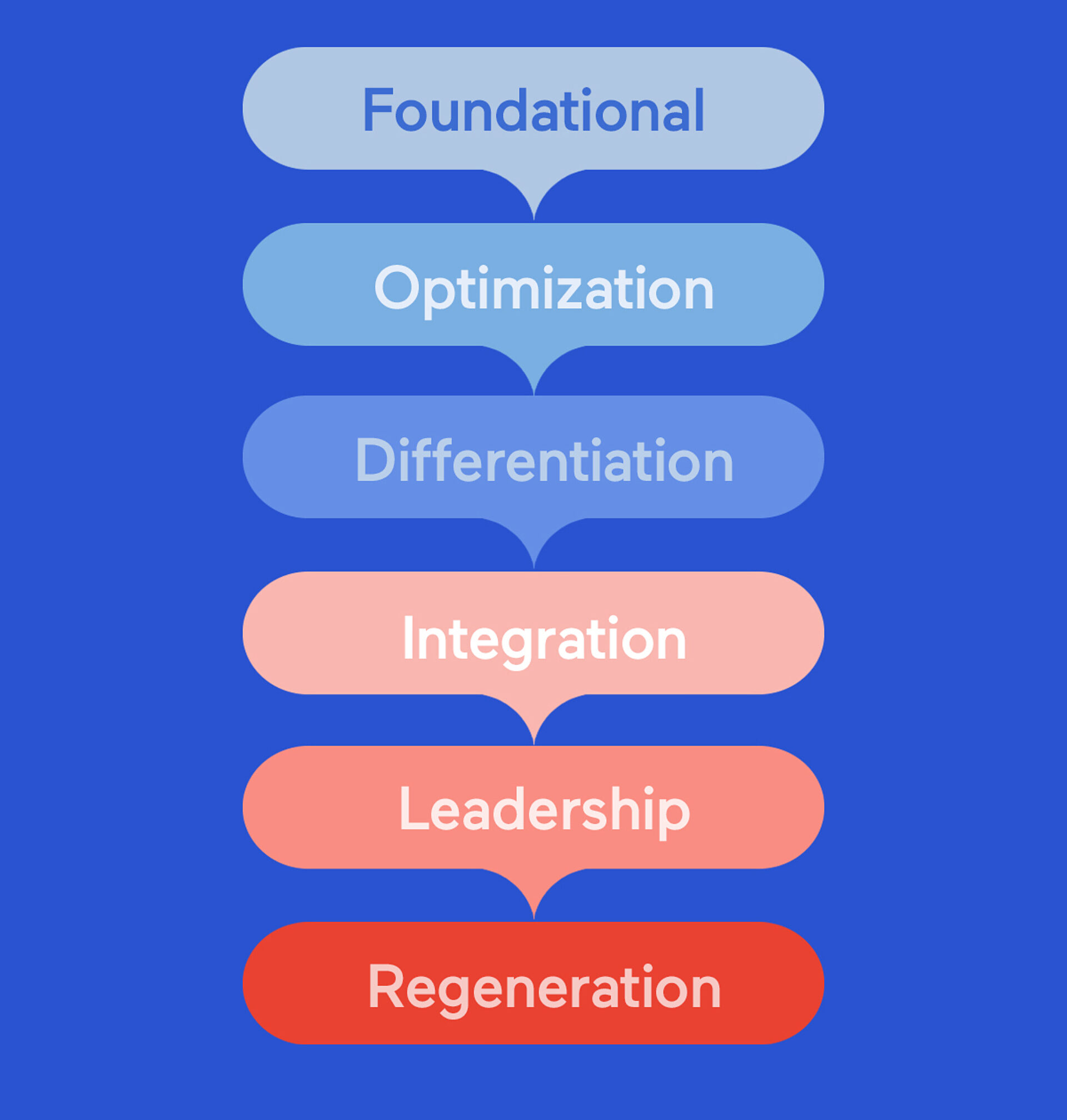
To simplify the different levels of maturity, at LG2 we defined a non-scientific scale for brands that presents the different approaches to sustainable practices:
On one end of the scale are convenience strategies, which are unique initiatives and one-off projects that often respond to an emergency or the market. At this level, there’s minimal integration of sustainability into the business model. On the other end of the spectrum are regenerative companies: ones that have made sustainable impact a part of their business strategy and completely integrate ESG factors into their business model.
Knowing where a business stands on this scale dictates both the volume and frequency of its ESG communications. A good rule of thumb when thinking about the extent of communications is to make sure it’s proportional to the importance of the actions within the organization. If the initiative only represents 1% of a brand’s impact, it’s not justifiable to make it 80% of the messaging. On the flipside, if a company intends to be a thought leader in its market for sustainability efforts, it should be a significant part of the business model and well integrated into the value chain.
Step 3:
How should we say it?
Beyond the messaging itself, brands also need to consider the production and distribution of those messages. This is part of the principles of responsible design, which goes beyond thinking about traditional design and communication best practices to consider environmental, social and economic impacts.
While the gut reaction to being green is to cut back on paper and turn to digital, even websites have a carbon footprint – and sometimes it’s bigger than that of print communications. If a business has an e-commerce platform and is adding an impact report, make sure it isn’t designed or hosted in a way that results in higher emissions. Today, there are many carbon calculators for checking a website’s emissions. Brands should also consider whether its website has accessibility features such as dark mode and compatibility with text-to-speech readers. The best communications combine both performance and responsibility.
In the end
Effective sustainability communication can drive significant change, both in the world and in customers’ perceptions. When done right, it assures consumers that a brand aligns with their values and demonstrates retailers’ sincere commitments. All citizens have the power to vote with their wallets, and businesses have a duty to make that vote sustainable for our world.